
DeBary Previous Resident Sources
The right source depends on the era and on whether the question concerns an owner or an occupant. The Volusia deed chain is continuous farther back than the web portal, while census and directory records add the household layer. DeBary municipal files are strongest after incorporation. The exact run of regional reverse directories has not been verified online, so a library shelf check is part of the process.
| Source | Years it covers | Where held | What it shows |
|---|---|---|---|
| Deed index and images | Web 4/4/1988-present; counter 1887-present | Volusia Clerk Recording | Owners, transfers, legal description |
| Parcel record | Current; history varies | VCPA | Owner, sales, building facts, exemptions |
| Federal census | Public through 1950 | NARA and library databases | Household and location |
| Regional directories | Exact DeBary run unverified | Library reference search | Annual occupant and address clues |
| City permits | City era mainly since 1993 | DeBary Growth Management | Construction and change evidence |
| News and obituaries | Title dependent | Volusia library databases | Deaths, heirs, moves, social context |
Begin with VCPA for a modern parcel. For a pre-1993 story, expect Volusia County files and older place labels. For an occupant between deed transfers, search census, directories, newspapers, and probate.
DeBary Deed Chain Backward
The Volusia Property Appraiser search supplies the current owner, situs, owner mailing address, legal description, parcel keys, sales, building traits, and recorded sale references. Copy the legal description exactly. It is the best defense against a street label that changed while the same land remained in place.
- Open the current parcel card and note the latest qualified sale and its instrument reference.
- Find that purchase in the Volusia Official Records inquiry.
- Read the deed. The present owner is grantee and the earlier owner is grantor.
- Search that grantor as a grantee before the sale date and verify the same legal description.
- Repeat to the web cutoff, then continue with courthouse indexes, microfilm, digital files, or books.
- Grantor
- The party transferring an interest in the recorded instrument.
- Grantee
- The party receiving that interest.
- Chain of title
- The linked series of transfers for the same land.
- Legal description
- The recorded words that identify land independently of its postal address.
A similar surname or nearby address is not enough. Match the lot, block, subdivision, parcel reference, or other legal description at every step.
DeBary Records Beyond the Web
Online released Official Records begin April 4, 1988, but the Recording Department’s public research area reaches 1887. Courthouse Room A121 provides terminals, microfilm, and digital material. Original books may be used by appointment through 386-736-5912. Staff will explain equipment but cannot do the title research for a visitor.
Free online images may be printed. Office copies are $1 per page, certification is $2 per document, and credit-card transactions add a 3.5 percent provider fee. Search by name, instrument number, book and page, or advanced criteria. Keep party role, document type, and date limits in the notes.
The Clerk recording page documents this coverage split. The date gap is a records-access issue, not proof that no older transfer exists.
Note: Courtroom and counter research reaches far past the public web index, so an empty online result never ends an older DeBary chain.
DeBary Past Household Trail
Deeds identify ownership, not every person who lived there. Pair the land chain with public census schedules and regional directories. The newest public population census is 1950 under the 72-year rule, and the 1890 population census is largely lost. Volusia County Public Library offers HeritageQuest for remote card access and Ancestry Library Edition only on branch computers or branch Wi-Fi.
- Fix the parcel and the historical place name for the target year.
- Anchor one known person in a public census and record the full household and location.
- Check directory years on both sides of that census for moves, spouse forms, and spelling changes.
- Switch to a reverse section when the street address is known, then compare it with the deed chain.
- Use a newspaper, obituary, or probate file to explain a death, move, or transfer.
The exact DeBary publisher and year run was not found in an authoritative catalog. Ask a librarian to search DeBary, Enterprise, Orange City, Sanford, West Volusia, Polk, Mullin-Kille, telephone directory, reverse directory, and criss-cross. The collections themselves are treated in more depth on the DeBary city directory page.
Earlier Names for DeBary Residents
DeBary became a city on December 31, 1993, but the community was much older. Previous residents may be indexed under Enterprise, Fort Florida, Benson Junction, Valdez, Orange City, Sanford-area telephone exchanges, or unincorporated Volusia County. Search the founder’s surname as de Bary, deBary, and DeBary as well.
The city grew around the St. Johns River and Lake Monroe, not a single rigid downtown grid. Early land, river-company, newspaper, census, and estate sources can be more useful than a modern municipal file. For the steamboat era, search DeBary Hall papers and river-company history alongside deeds and the 1880 census.
That geography is not a reason to merge places. Use the parcel legal description, subdivision plat, county map, and record date to show that an older label and the modern address concern the same land.
Date DeBary House Evidence
Neighborhood growth dates help decide which records should exist. Plantation Estates began in the 1950s. Meadowlea began in the 1970s and largely built out by the 1990s. Orlandia Heights and Terra Alta grew from the 1970s through about 2000. River Bluff Estates, Traderscove, and Summerhaven began in the 1980s.
St. Johns River Estates developed in the 1990s. Glen Abbey and DeBary Golf & Country Club grew mainly in the 1990s and 2000s. Riviera Bella West and Springview Woods started in the 2000s, while Riviera Bella East, Rivington, and Springwalk at The Junction are newer. Deeds matter in every era, but city permit files become richer after incorporation.
A permit can date construction or remodeling, but not an occupant’s full stay. If an address is claimed for a year before its subdivision developed, check whether modern numbering was applied to older land. Do not invent a renumbering event: no verified citywide DeBary renumbering year was found.
Close DeBary Resident Trails
Probate and obituaries can explain why a deed chain changes after a death and can identify relatives or a personal representative. Volusia probate is in Courthouse Room A222 at 386-736-5914. Public dockets may show decedent, petitioner, counsel, events, and sometimes heirs or addresses, while confidential papers remain closed.
Marriage records offer another relationship link. Volusia’s marriage series reaches 1855. Online images can be printed free, while an ordinary certified copy is typically $3. Older searches should include both parties and a year; the Clerk search charge is $2 per name per year.
Use the Volusia marriage records page to see county access.
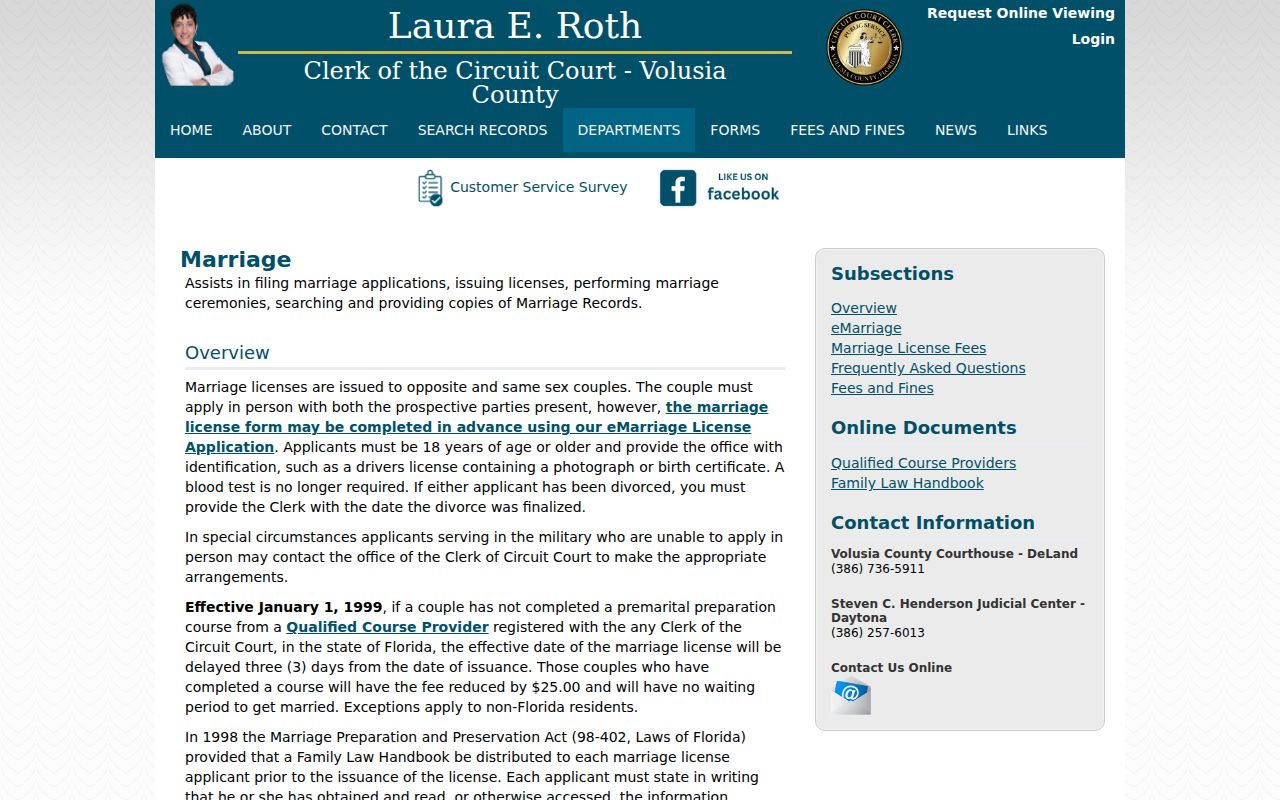
A marriage record can connect names, but it does not prove that both people occupied the researched house.
For obituaries, the library’s NewsBank access includes the Daytona Beach News-Journal, DeLand News Historical Archive, West Volusia Beacon, Orlando Sentinel, and HeritageHub. Search nearby community and subdivision names as well as DeBary.
Vital Records for DeBary Residents
Florida vital records can confirm an event after the address chain has supplied a person. Access depends on record type, age, and relationship. Birth records under 125 years old are confidential. Death records without cause are public, while cause of death is confidential for 50 years. Marriage and dissolution certifications are generally public, but adoption files and original certificates are restricted.
Start at the Florida birth certificate page.
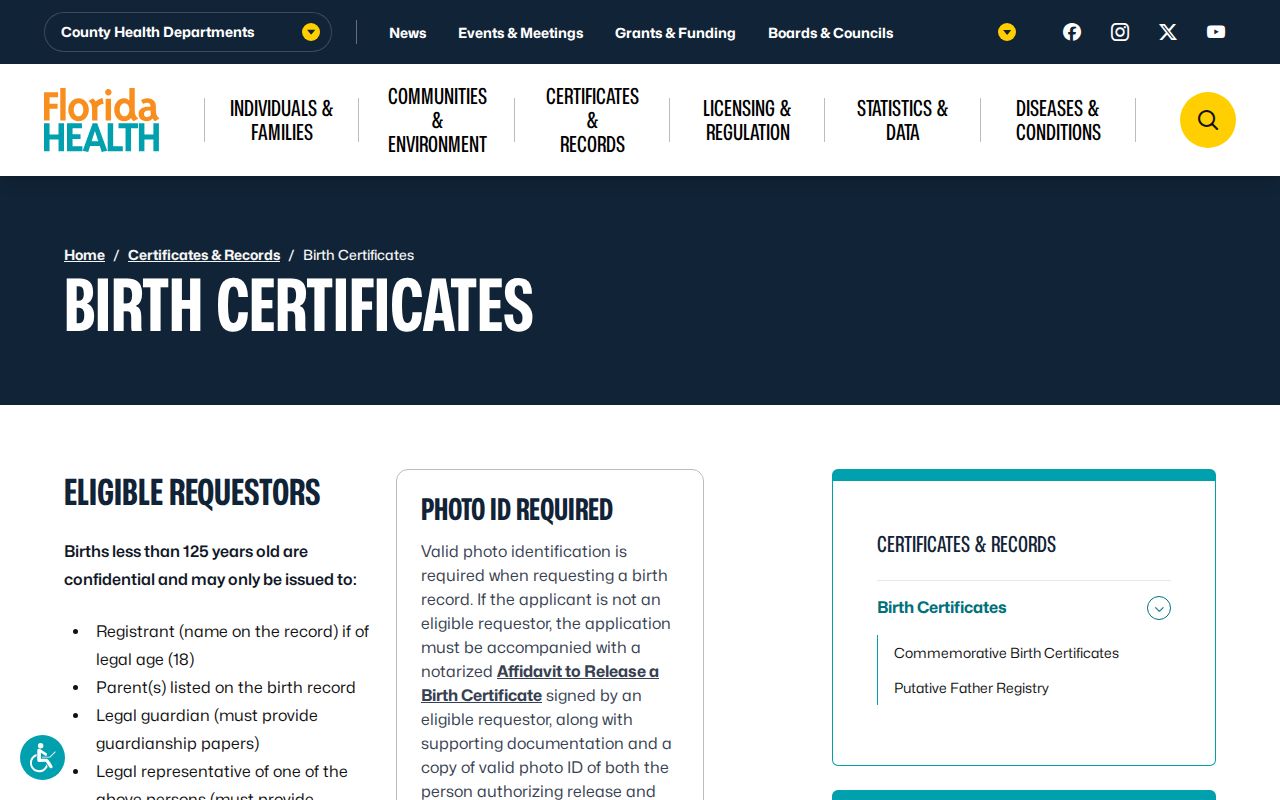
The state page identifies eligibility, proof, and order methods for a protected birth record.
For a death, use the Florida death certificate page.
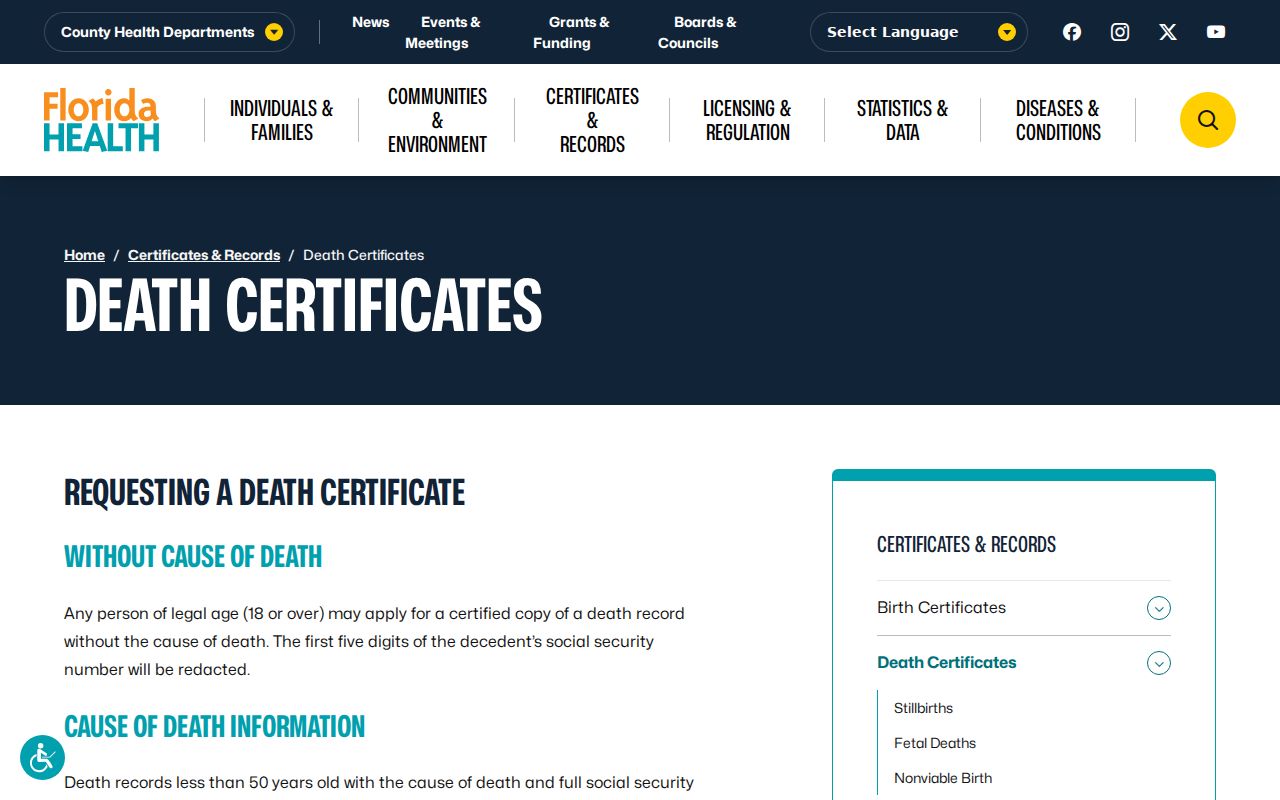
Choose the permitted copy type and do not treat cause-of-death access as open during its restricted period.
The state also provides marriage certifications.
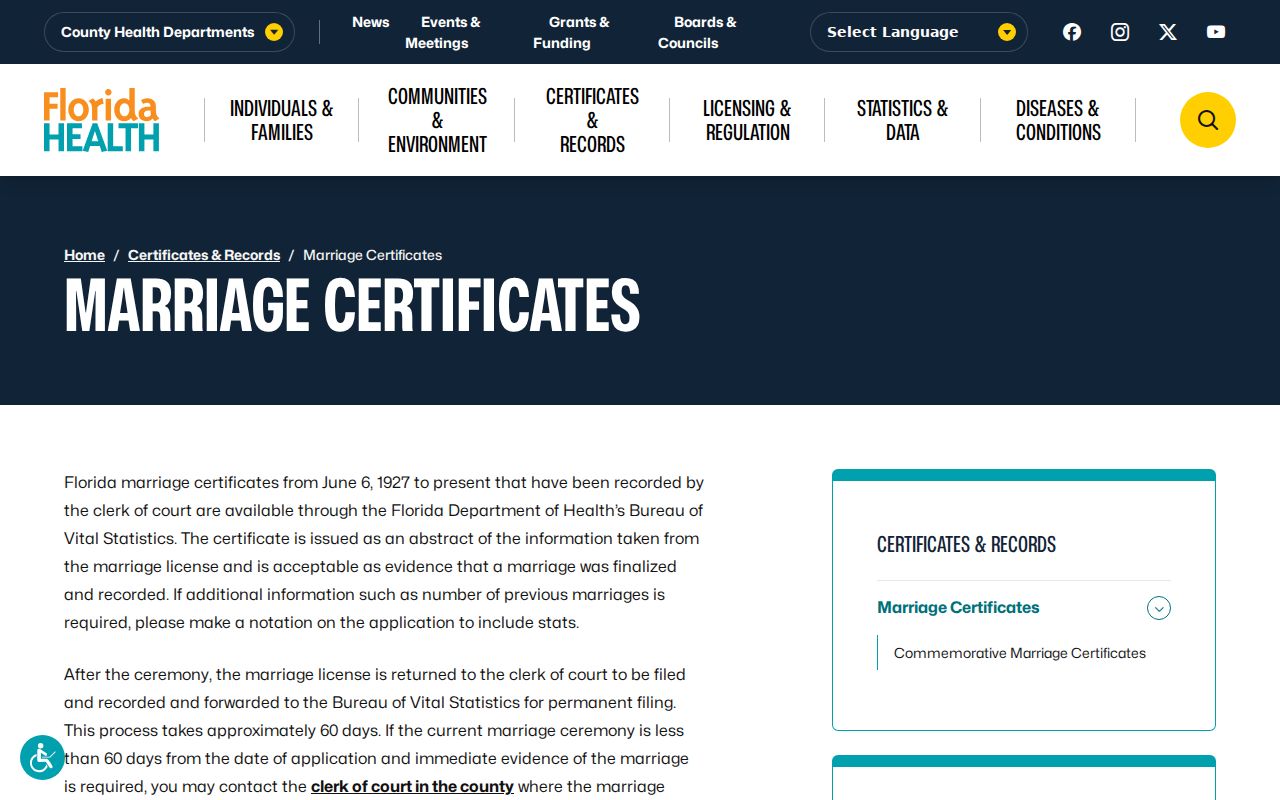
A state certification confirms the event, while the county license file may hold different detail.
DeBary Relationship Record Routes
A Florida dissolution record is an event certification, not the complete public court case. Use the Florida divorce certificate page for the state record, then the Volusia Clerk for public pleadings or docket detail when needed.
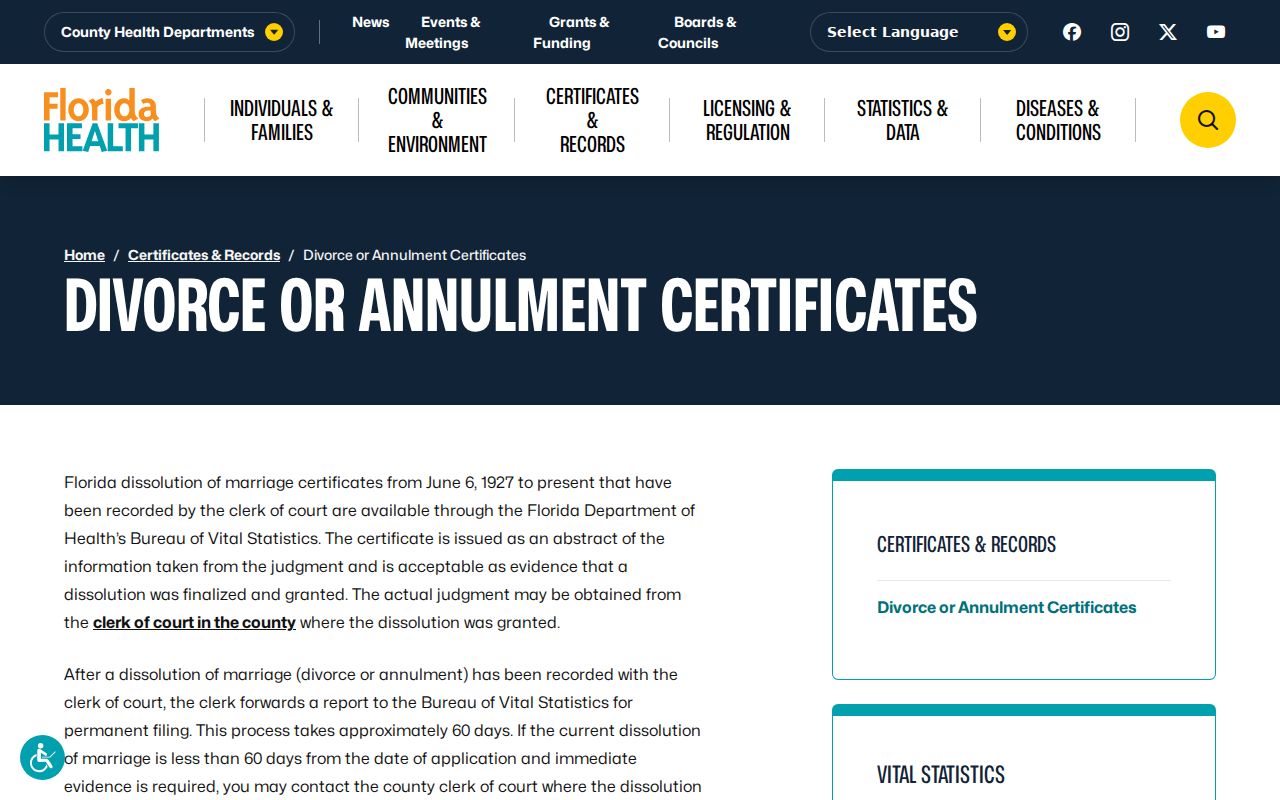
This distinction prevents a brief state certification from being mistaken for the full local file.
Applications for birth, death, marriage, and dissolution records are gathered on the Florida vital records forms page.
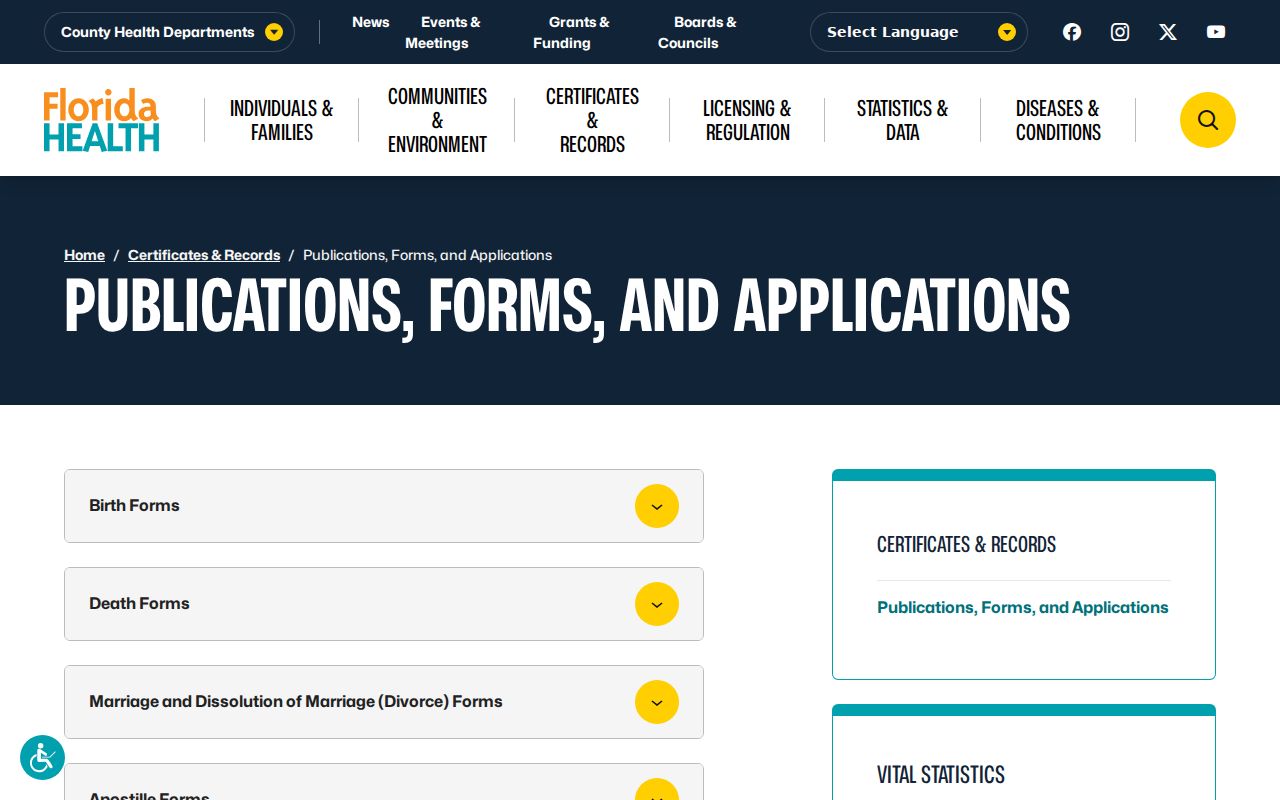
Select the form for the event and copy type, then follow its proof and identification rules.
Respect DeBary Previous Residents
Past residents research works best for house history, genealogy, estate questions, and reconnecting through lawful channels. It should distinguish a former owner from a former occupant and a historical lead from an official fact. Utility account holders are not assumed public. A permit name proves a role in a project, not continuous residence.
Some trails must stop. Protected addresses, confidential vital records, sealed court material, and private household rosters are not gaps to evade. Note the source date and ask the custodian how to correct a wrong official record.
Lawful use. Research previous residents only for legitimate personal and historical purposes. Never use a record to track, stalk, harass, threaten, or harm a living person.
A responsible DeBary history preserves uncertainty. It links each name to a dated record, uses the legal description to hold the land steady, and does not turn a clue into a claim.