
DeBary City Directory Sources
DeBary has no verified, continuous run of city directories under its present city name. The reliable method treats a city directory as one layer in a wider Volusia collection. The library, Clerk, City archives, and state repositories hold sources with distinct dates and access rules. Each can place a person in a household, on land, or within a community, but none should be stretched beyond what its catalog says.
| Collection | Years | Where Held | Access |
|---|---|---|---|
| Federal population census | 1880-1950 relevant; most of 1890 lost | NARA and library databases | Branch or remote database |
| Regional city and telephone directories | Exact DeBary run not verified | Volusia library reference search | Catalog and shelf check |
| Volusia official records | 1887-present; web from April 4, 1988 | Volusia Clerk Recording | Web, terminal, microfilm |
| Volusia marriages | 1855-present | Volusia Clerk; state from June 1927 | Inquiry and copy request |
| Newspapers | Title-specific ranges | Library NewsBank | Licensed database |
| City archives and oral histories | Historic maps/photos; project launched 2024 | City Clerk and Historic Preservation Board | Staff or records request |
A librarian can test regional DeLand, Sanford, Orange City, Enterprise, West Volusia, and telephone-directory titles. Ask for the exact edition, shelf location, format, and missing years. It would be wrong to assign Polk or another publisher to DeBary without a catalog record or title-page check.
DeBary Directory Place Names
Historical residents may be filed under DeBary, Enterprise, Fort Florida, Benson Junction, Orange City, a Sanford-area telephone exchange, or unincorporated Volusia County. The founder's surname also appears as “de Bary,” “deBary,” and “DeBary.” Search every form. DeBary became a city on December 31, 1993, though settlement along the St. Johns River began much earlier.
This quirk explains why a modern city search can miss a family that stayed on the same land. Before incorporation, municipal records did not exist as a City of DeBary series. County deeds, census schedules, regional directories, newspapers, river-company history, and estate papers carry that earlier story. A deed's legal description can keep the land fixed when locality labels change.
For the steamboat era, search land bought by Frederick de Bary in 1871, DeBary-Baya Merchants' Line references from 1883, and the DeBary Merchants' Line name used from 1889. Those are search anchors, not proof of residence.
Note: A DeBary city directory search should include older community names before concluding that a resident is absent.
DeBary Library Directory Tools
The Volusia County Public Library database list is the main licensed research channel. Ancestry Library Edition includes census, land, probate, court, church, vital, passenger, and directory material, but works only on library computers or branch Wi-Fi. HeritageQuest is available remotely to cardholders and includes census, family histories, directories, land, probate, vital material, PERSI, and pensions. Fold3 adds military collections.
The DeBary branch contact page leads to staff at 200 N. Charles R. Beall Boulevard, 386-668-3835. Ask for a title and shelf search. Useful terms include city directory, telephone directory, reverse directory, criss-cross, Polk, Mullin-Kille, DeLand, Sanford, Orange City, Enterprise, West Volusia, and DeBary.
View the library genealogy database page before visiting.
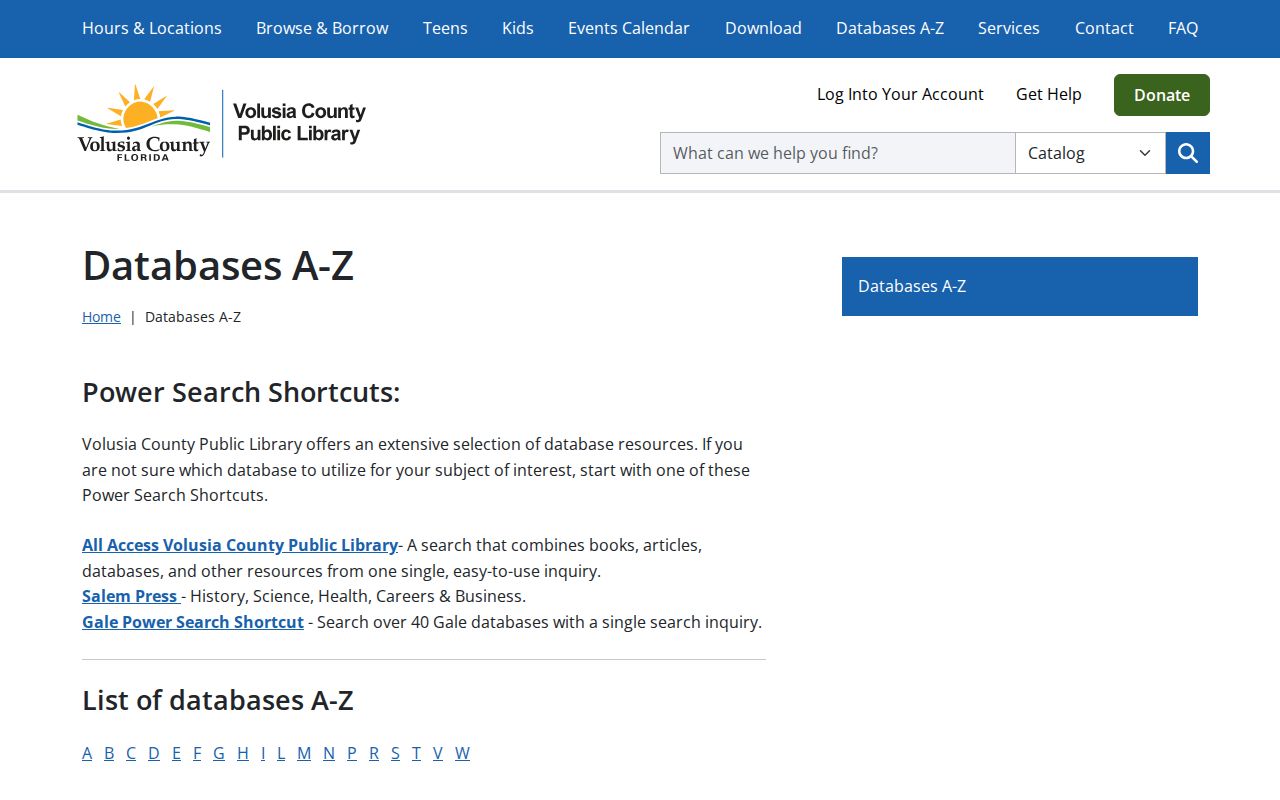
The captured page helps separate tools that require a branch visit from those available to cardholders at home.
Read DeBary Directory Entries
A period entry can compress several facts into one line. Treat each mark as edition-specific. A Polk-style format may show surname, given name or initial, spouse in parentheses, widow notation, occupation, employer abbreviation, home address, and sometimes a homeowner mark. A business entry can add a trade and phone. This describes a common format, not a claim that an unverified DeBary volume contains every field.
| Name | Alphabetical name, initials, spelling, and possible spouse notation |
|---|---|
| Work | Occupation, title, employer abbreviation, or business class |
| Address | House number and street as printed in that edition |
| Status mark | Possible homeowner, boarder, or widow notation |
| Telephone | A listed number when the edition includes one |
- Criss-cross directory
- A section arranged by street and house number rather than surname.
- Householder index
- An index used to locate the named person responsible for a household listing.
- Abbreviation key
- The edition's list explaining short forms and symbols. Copy it before interpreting an entry.
Capture the title page, year, coverage statement, key, alphabetical listing, and matching address listing. That packet preserves the evidence needed to explain the entry.
Confirm DeBary Directory Clues
NewsBank includes the Daytona Beach News-Journal, DeLand News Historical Archive, West Volusia Beacon, Orlando Sentinel, broader historical newspapers, and HeritageHub obituary content. Search a name with a subdivision, road, spouse, business, and nearby community. Search death notices, probate notices, social columns, and property advertisements separately.
Newspaper text can explain why a name moved or vanished between city directories. It remains a lead. Confirm marriage through the Clerk, death through the proper certificate channel, and land ownership through deeds and parcel records. OCR can misread names, while licensed obituary sets can omit scans.
For archive context, review DeBary's historical narrative.
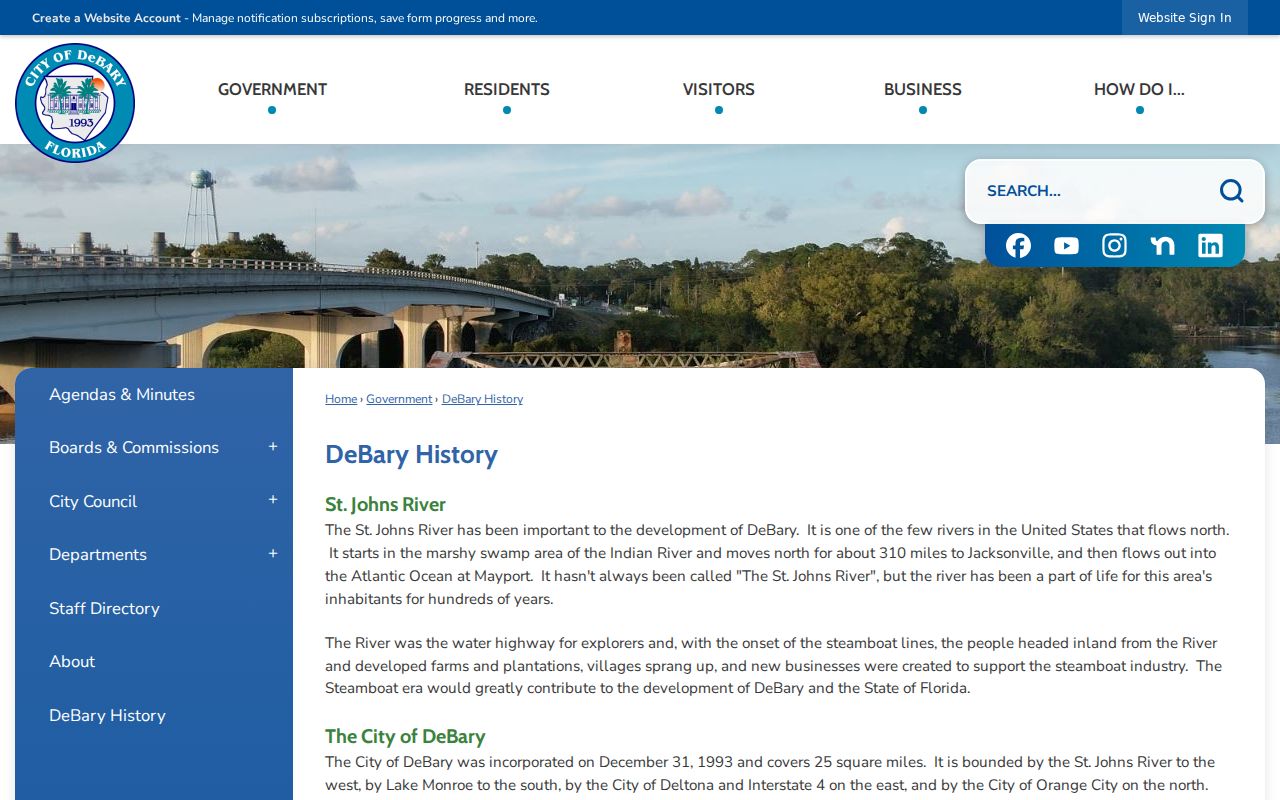
The city narrative supplies place names, dates, and river-history terms that can sharpen a newspaper query.
DeBary Oral History Directory
In spring 2024, the Historic Preservation Board sought interviews with residents and business owners who had personal or family history in DeBary during 1993 or earlier. The project is a valuable city-directory companion because interview metadata may preserve surnames, businesses, neighborhoods, and old place terms that no web index recognizes.
The City's archaeological research used archive maps and photographs, State Library and Archives images, newspapers, and early survey, postal, and war maps. That source mix offers a tested path for addresses from before modern parcel systems. Contact the City Clerk through the DeBary public-records channel and state the family, business, neighborhood, and date range. Requests may be oral, emailed, mailed, or sent through the portal.
Oral histories do not replace an annual directory. They explain a listing and reveal terms needed to search other records.
DeBary Directory Archive Routes
Florida Memory and the State Archives catalog extend a DeBary city directory search into maps, photographs, county records, and pensions. Search the city, older community names, founder surname forms, and Volusia County. Collection dates differ, so read each catalog description before drawing conclusions.
A failed online query is not the end. Ask archive staff about lightly described folders, then try West Volusia historical collections for Enterprise, Orange City, and DeLand material. Confirm holdings, copy rules, and fees directly. These channels work well for the oldest areas near U.S. 17/92 and for river families whose records predate city government.
Neighborhood age can also guide the source choice. Plantation Estates began in the 1950s. Meadowlea started in the 1970s and was largely built out by the 1990s. Orlandia Heights and Terra Alta developed from the 1970s through about 2000, while River Bluff Estates, Traderscove, and Summerhaven began in the 1980s. For those communities, deeds and later regional listings are more likely to help than an early census address.
Newer places call for a different mix. St. Johns River Estates developed in the 1990s. Glen Abbey and DeBary Golf and Country Club grew mainly in the 1990s and 2000s. Riviera Bella and the areas near the SunRail district are later still. Use the development era to decide whether to ask first for a census, directory, parcel record, permit file, or recent newspaper notice. The date does not prove when one household arrived, but it keeps the search within records that could exist.
Trace DeBary Directory Families
Family-history work is stronger when a directory clue is tested against records created for another purpose. Begin near a public census year. Inspect listings on both sides, track addresses, and note spouse names and spelling. When an address appears, compare it with the legal parcel and deed chain.
- Record the earliest supported census or directory appearance, source title, year, and locality.
- Move forward one available edition at a time, checking name, spouse, work, and address changes.
- Use the reverse section, when present, to compare the address and nearby listings.
- Pair the trail with public 1880 through 1950 censuses, remembering that most of 1890 was lost.
- Close the trail with a deed, marriage, probate file, death record, or obituary.
Disappearance proves little. A resident may have moved, died, changed a surname, joined another household entry, or gone unlisted. Two independent records should support the conclusion. Current address research belongs in the DeBary street directory process.
Request DeBary Directory Details
Ask a librarian for publisher, full title, inclusive years, gaps, repository, call number, format, and copy policy. Ask whether DeBary streets appear in a regional volume. A Daytona catalog hit does not prove that inland DeBary was indexed.
Check the library contacts before making the request.
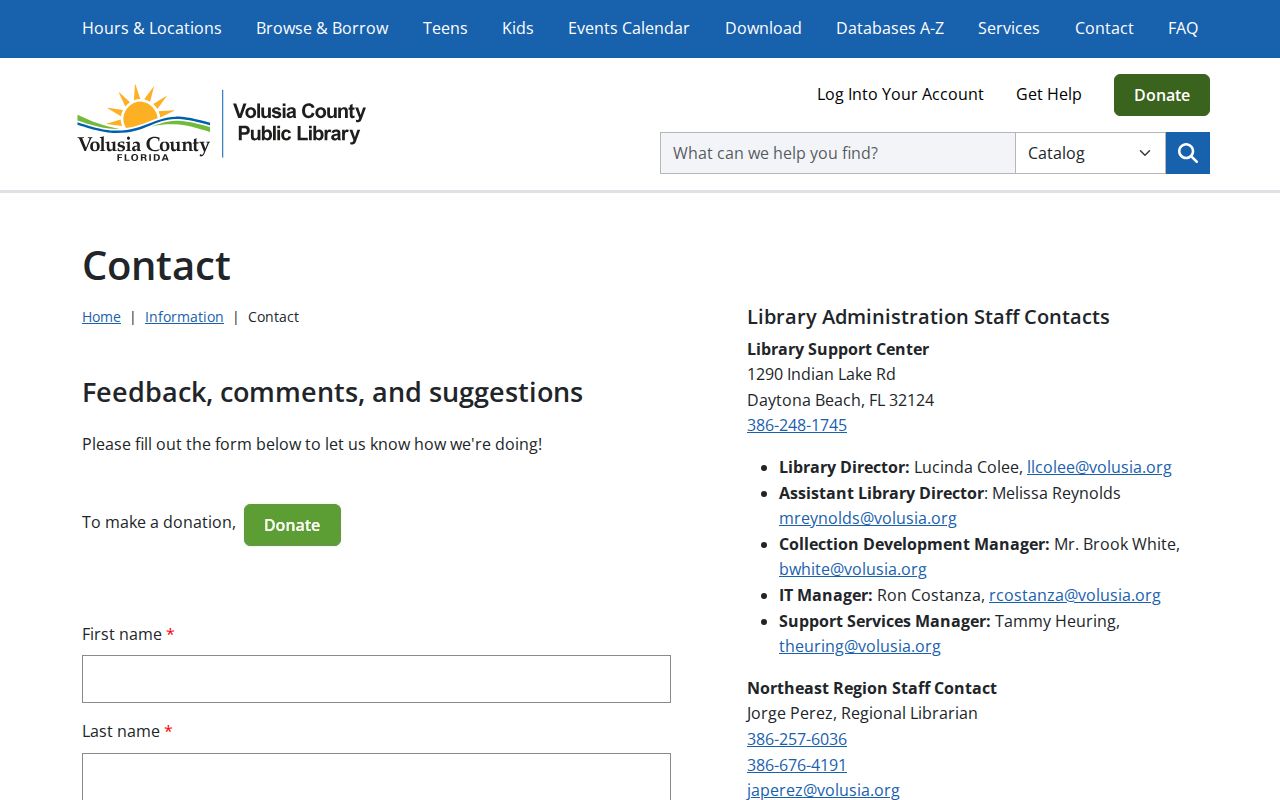
The contact listing identifies the right branch route when the catalog lacks edition-level detail.
Research tip. Photograph the title page and abbreviation key before copying any name or address entry.